Configurations
Armando
Emerald RSCII Jewelry & Watch Safe in Titanium
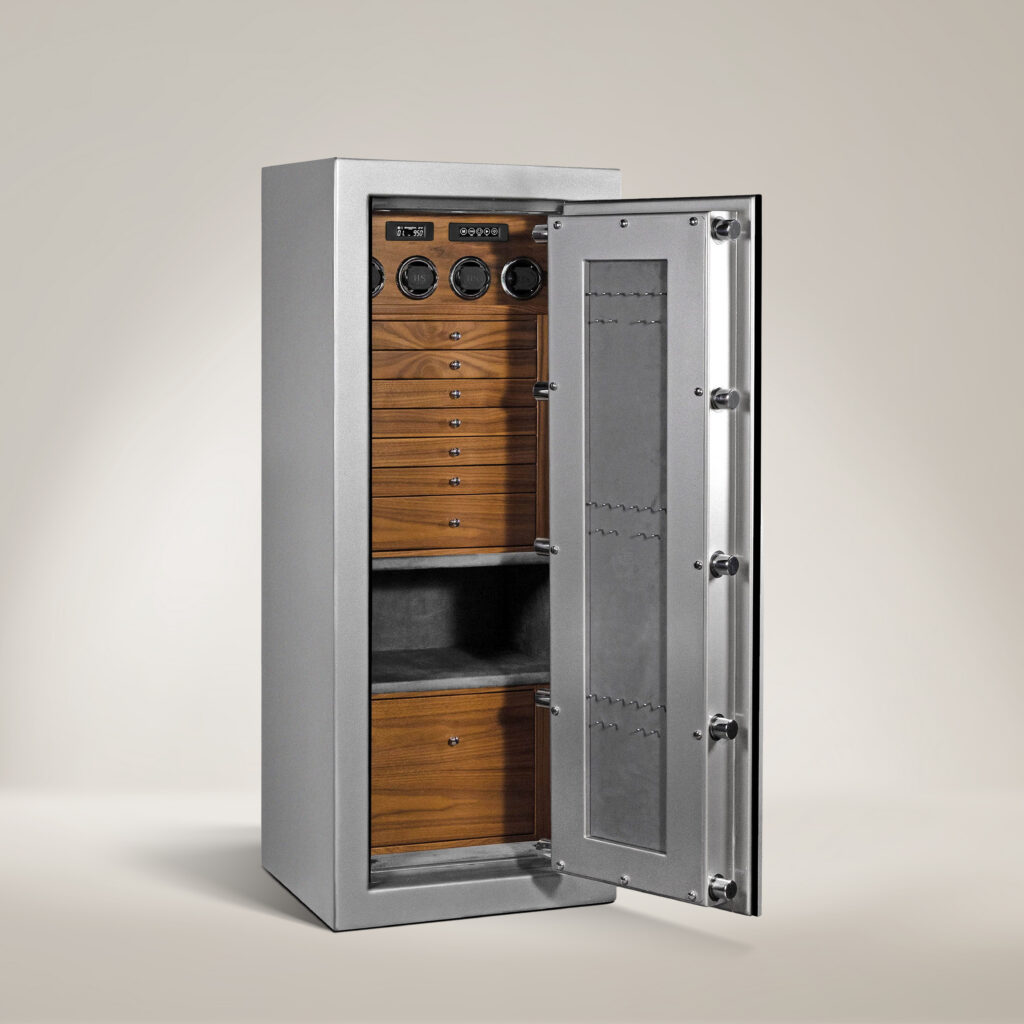
This Emerald jewelry safe will secure, organize and enliven your fine jewelry. This tall Titanium safe features charcoal microsuede, chrome hardware and 7 jewelry drawers and file crafted in Walnut. It also has a necklace panel built into the door.
Upgrade Your Drawer Liners
Need Help Choosing?
FAQ
How do these two configurations differ?
Nana is alabaster white with oil-rubbed bronze, high-gloss birdseye maple drawers, a file drawer for documents, and three winders at UL RSC Level I. Armando is titanium metallic with polished chrome, walnut drawers, four winders, and the higher RSC II rating.
What is the difference between RSC I and RSC II?
RSC I certifies five minutes of resistance to attack with common hand tools. RSC II raises that to ten net working minutes against a skilled professional using high-powered tools including grinders and drills. RSC II is the right choice if your collection or your carrier calls for it.
How do the watch winders work?
Our winders are built by Heisse & Söhne, a second-generation German manufacturer. Each is programmable for turns per day and rotation direction, clockwise, counter-clockwise, or bi-directional. Most automatic watches need 650 to 900 TPD, though it varies by movement. A ball bearing cuff holds each watch during rotation.
What is the necklace rack for?
It mounts inside the door and hangs long pieces vertically, so chains stay untangled and visible instead of coiled in a drawer. It uses space that would otherwise go unused, which makes it one of the most practical features we build.
What does a two-hour fire rating actually mean?
An independent laboratory heated the safe under controlled fire conditions and certified the interior stayed below 350 degrees Fahrenheit, where paper begins to char, for two full hours. A typical residential fire reaches 1,100 degrees or higher. Two hours suits wildfire-prone regions and irreplaceable pieces.
Does the safe need to be anchored?
Yes. Weight alone is not security: a crew with dollies and a vehicle can remove an unanchored safe and open it elsewhere. Anchoring is also a seismic safety measure, and many policies require it for coverage. Our team handles it during white-glove delivery and confirms your floor construction before anything is drilled.
Will my insurance company accept this rating?
UL and ETL ratings are earned through independent third-party testing rather than claimed by the manufacturer, which is why underwriters recognize them. Requirements vary by collection value, location, and loss history, so involve your carrier before you order rather than after installation. Our specialists work directly with underwriters.