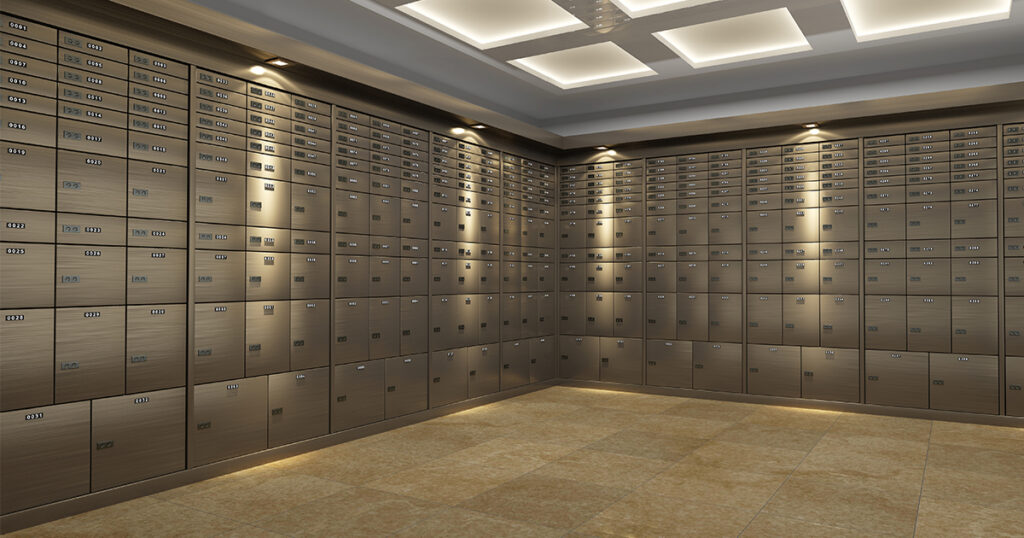
Did you know that there are no rules or laws requiring banks to reimburse customers if valuables in their “safe” deposit boxes are stolen or destroyed?
According to The New York Times:
“There are no federal laws governing the boxes; no rules require banks to compensate customers if their property is stolen or destroyed.”
There are countless stories of banks losing customers’ boxes and contents. This isn’t the type of theft that’s easily taken care of in court, either. It’s rare that those who’ve been stolen from are compensated much, if at all. The banks have the upper hand, and in many cases it’s the fine print that results in the ultimate loss for the customer.
In one such case, a couple in Universal City, CA leased a safe deposit box for their jewelry, cash, gemstones, and family heirlooms while their house was being renovated. They paid $246 for a one-year rental. When the wife went to pick up the items just 9 months later, they were gone. The Bank of America location was closing, and all boxes had been emptied. The bank claimed to have mailed notices to all customers, but the couple never received one.
A jury initially awarded the couple $2.5 million for lost items and an additional $2 million in punitive damages. Bank of America challenged the verdict, arguing that any recovery should be restricted by the terms detailed in its rental contract:
“The bank’s liability for any loss in connection with the box for whatever reason shall not exceed ten (10) times the annual rent charged for the box.”
In the end, the judge reduced compensation to $2,460 and cut the punitive damages to $150,000.
The victim recounted the trial:
“We were shocked, furious and in disbelief that such a thing could happen. The attorneys were throwing stupid counter arguments at us, asking, ‘Why would you put so many valuables in the safe deposit box?’ We were like, where else do you want us to put it? The word ‘safe’ is supposed to mean ‘safe.’”
Bank of America’s terms aren’t unlike those of its competitors:
“Wells Fargo’s safe-deposit-box contract caps the bank’s liability at $500. Citigroup limits it to 500 times the box’s annual rent, while JPMorgan Chase has a $25,000 ceiling on its liability.”
In an interview with The New York Times, David P. McGuinn, founder of the industry consulting firm Safe Deposit Specialists, said:
“The big banks fight tooth and nail, and prolong and delay — whatever it takes to wear people down. The larger the claim, the more likely they are to battle it for years.”
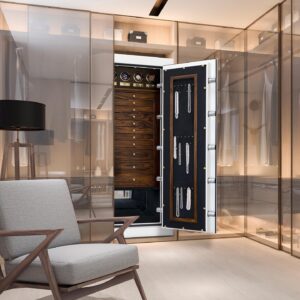
A word of advice: don’t depend on banks. Get yourself a quality home safe. Not one from Costco or Walmart that any smash-and-grab burglar can break into. Look for UL certification to give you confidence that you’re buying trustworthy security.
At Casoro Jewelry Safes and Maximum Security, we provide high-quality safes and help clients design and select just the right one, providing convenience, protection, and, most importantly, peace of mind.