Watch Winder Safes
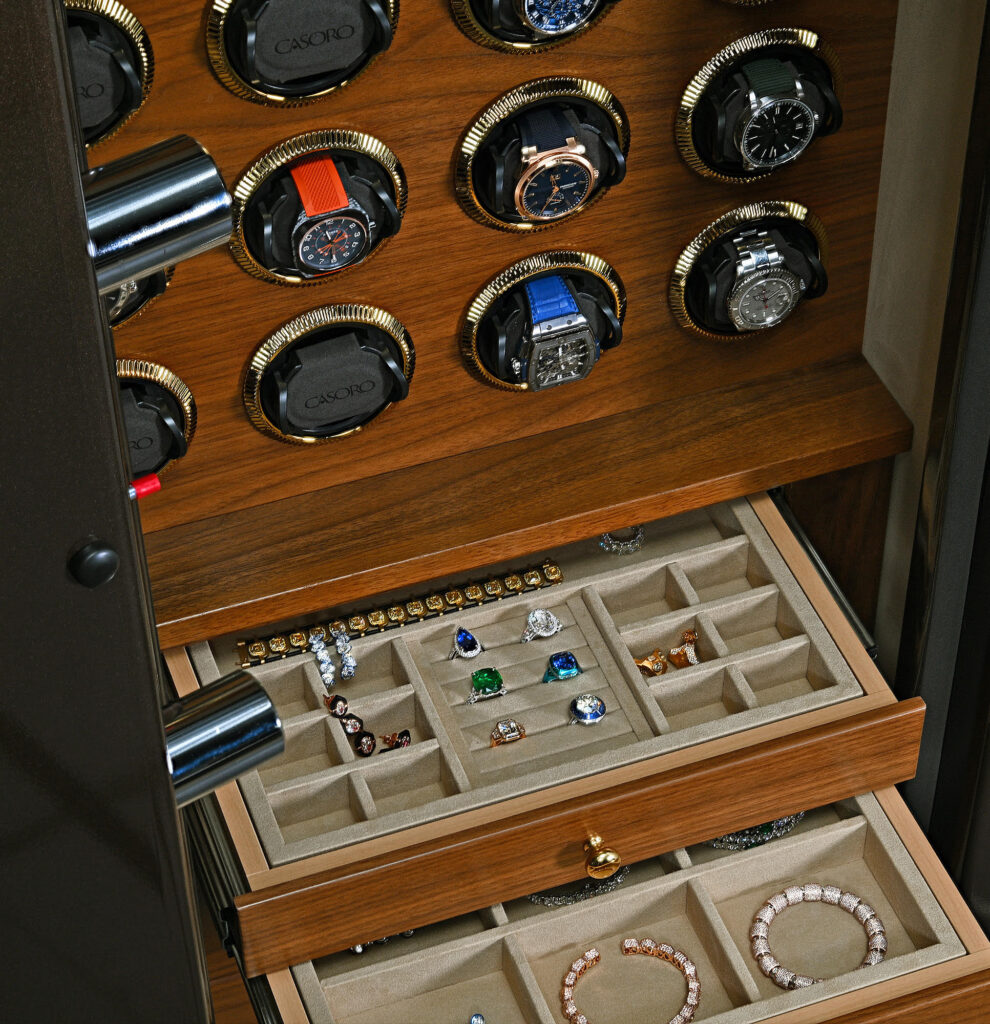
Why a Winder
If you wear one watch every day, your wrist does the work. The moment you rotate between several, it does not. A three-hand watch is simple enough to restart. A perpetual calendar, annual calendar, moon phase, or tourbillon is not, and resetting every stopped complication can take real time and patience.
For a collector of automatic watches, a winder is not an indulgence. It is the right way to care for a collection. Own vintage or manually wound pieces? We have a different answer for those, covered below.
Where Your Winders Live
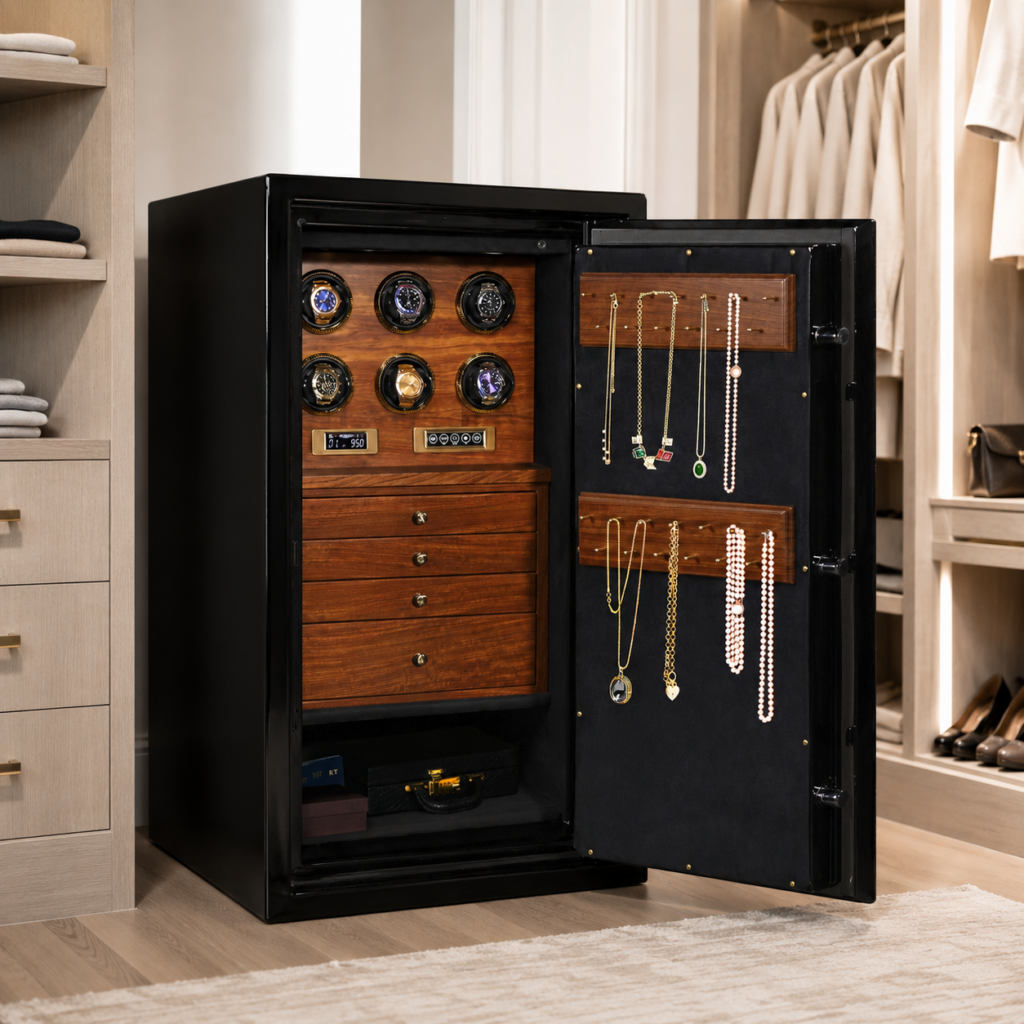
Safes With Watch Winders
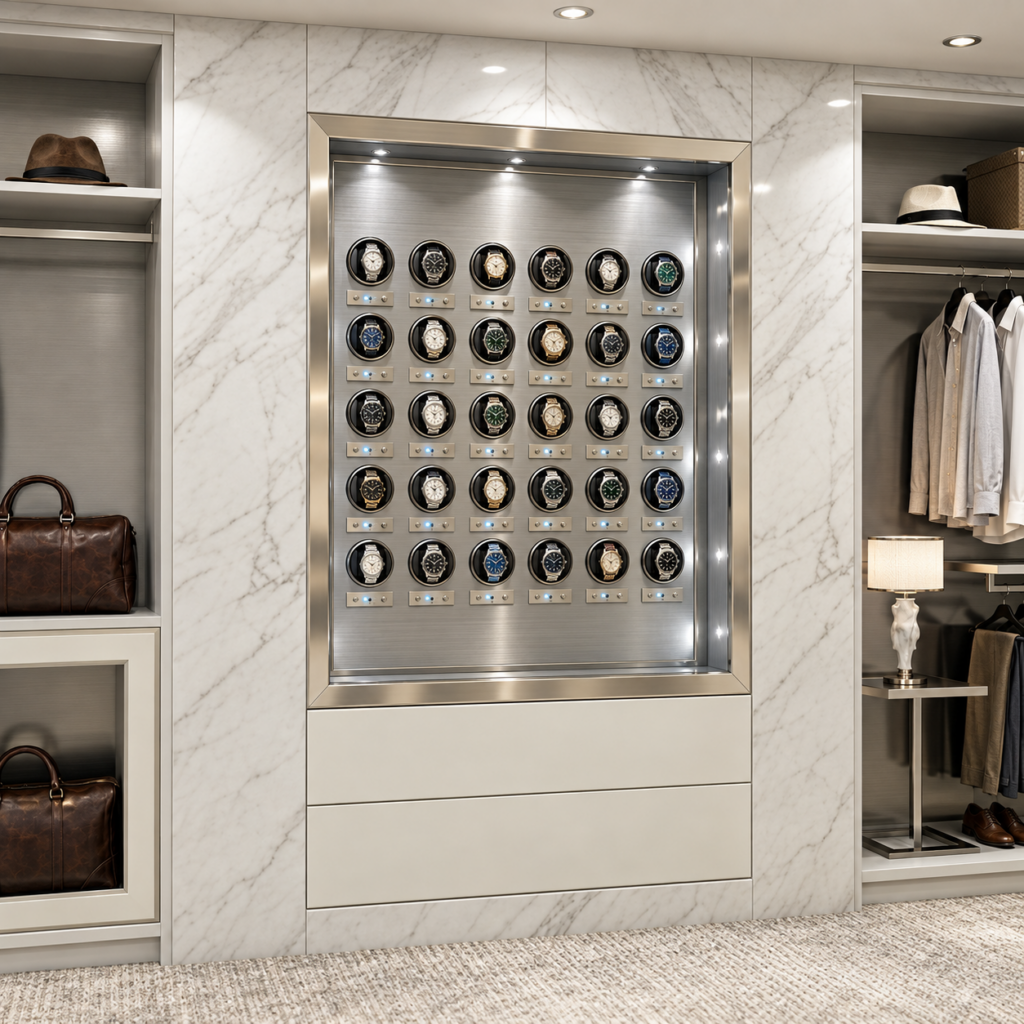
Watch Winder Walls and Panels
Engineered in Germany by One Family for Two Generations
German engineered and German made, built to run continuously and quietly for years without degrading.

Small Details, Considered
Turns Per Day and Why It Matters
Most automatic watches need between 650 and 900 TPD, though it varies by brand and movement.
Brand
Typical TPD
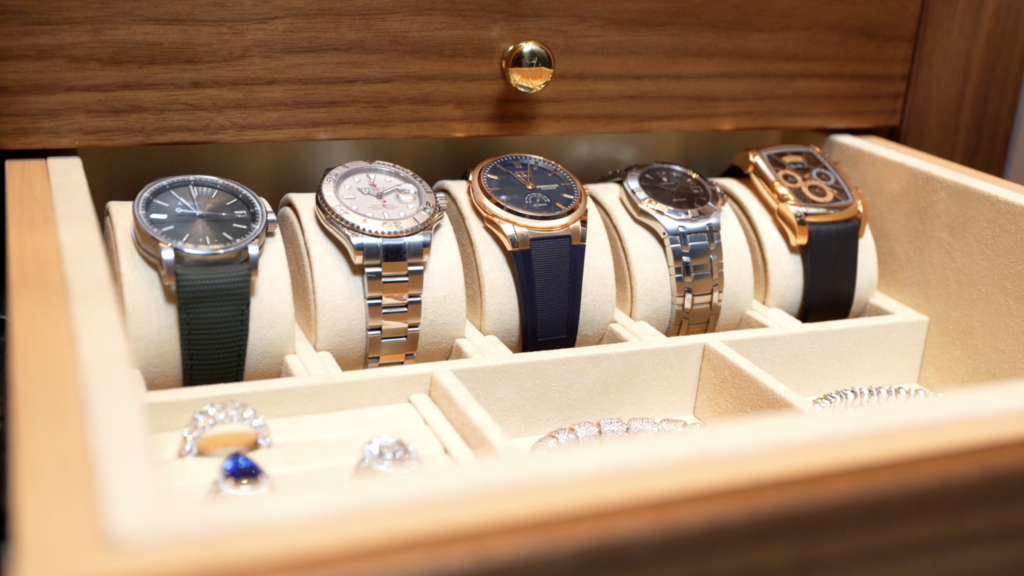
Passive Display
For those, we build passive display: the same handcrafted interiors, leather, and lighting, presenting the collection without a winding mechanism. Most serious collections end up using both.
Where to Start
If You Own...
Consider
Not sure? That is what our design consultants are for.
Every Casoro Is a Watch Safe
FAQ
Will a Casoro watch winder fit my watch?
Almost certainly. Our adjustable watch winder cuff fits nearly any size of watch band, and the ball bearing release mechanism locks it firmly in place during rotation. If you have an unusually large or small piece, our design consultants can confirm fit before you order.
What is a watch winder and do I need one?
A watch winder rotates an automatic watch when you’re not wearing it, mimicking wrist motion to keep it wound and running accurately. If you wear one watch daily, you don’t need one. If you rotate between several watches, a winder keeps every one wound and ready to wear. It’s especially useful for watches with complications such as a perpetual calendar, moon phase, annual calendar or tourbillon, which can take considerable time to reset once they stop.
What is TPD and how do I set it correctly?
TPD stands for turns per day, the number of rotations a winder completes in 24 hours. It’s the most important winder setting. Too few turns leaves the watch under-wound and running slow; too many is generally safe with modern watches but unnecessary. Most automatic watches need 650 to 900 TPD. Common reference points:
- Rolex, Omega and Patek Philippe: 650 to 800 TPD
- Jaeger-LeCoultre: 900 to 1,000 TPD
- High-complication movements: varies widely, so always check with the manufacturer
If you’re unsure, check your watch’s manual or contact the manufacturer.
Can a watch winder damage my watch?
A high-quality winder that’s correctly programmed won’t damage your watch. Modern automatic watches have a slip-clutch that prevents overwinding, so overwinding a quality watch on a quality winder is essentially impossible. Magnetism is a real concern only with cheap, poorly shielded winders. Heisse & Söhne winders are engineered with motor shielding specifically to eliminate this risk.
What brand of watch winders does Casoro use, and why?
Casoro partners exclusively with Heisse & Söhne, a second-generation German manufacturer operated by the Designhütte Manufaktur. We chose them after an extensive search for a partner that met our standards for build quality, engineering precision, long-term reliability and standing behind their product. Their winders are German engineered and German made, with whisper-quiet motors and precise programming, and are built to run continuously for years without losing performance.
Does Casoro build watch safes?
Yes. Casoro offers three watch storage options:
- Watch winders built into the safe, made by German manufacturer Heisse & Söhne and fully programmable for quiet mode, lighting, rotation direction and TPD (turns per day).
- Passive watch storage for vintage and classic watches that shouldn’t be wound continuously.
- Standalone watch winder boxes for an existing safe, a vault room, or a closet or dressing area.